
Powered By



Do children with Dravet syndrome share a distinctive set of facial features? If so, could these features help doctors diagnose the syndrome?
A group of researchers asked these questions, then designed a study to test the theories. Ultimately, the study did not identify a distinctive set of facial features that could reliably distinguish children with Dravet syndrome from their siblings.
In this article, we’ll discuss the initial theory about Dravet syndrome facial features and what the research actually showed. We’ll also discuss other ways Dravet syndrome affects children.
Sign up to view the results!
 Continue with Facebook
Continue with Email
A group of doctors was researching how Dravet syndrome affects families’ emotional and social well-being. In the process, the doctors met many children with the syndrome.
While attending a conference in 2008, the researchers noticed that children with Dravet syndrome appeared to have similar facial features.
Based on their observations, the doctors developed a theory that Dravet syndrome is associated with specific facial features. They suggested that these features included:
In more than 90 percent of cases, Dravet syndrome is caused by pathogenic mutations (disease-causing gene changes) in a gene called SCN1A. The doctors thought these gene changes might cause the characteristic facial features they observed.
By defining these facial features, they hoped that pediatric neurologists could use them as a clue to order genetic testing earlier and help diagnose Dravet syndrome.
The researchers designed a study to test their theory that children with Dravet syndrome had distinctive facial features. The study included children with Dravet syndrome and their siblings who didn’t have the condition. All children with Dravet syndrome had an SCN1A mutation.
The study had two parts. For both parts, parents provided digital photographs of their children (both children with Dravet syndrome and their unaffected siblings). These photos were close-up portraits that clearly showed the children’s faces.
For the first part of the study, researchers created a booklet containing photographs of both the children with Dravet syndrome and their unaffected siblings. The photographs they used included:
The photographs were put in random order. The researchers then asked a group of 16 pediatric neurologists to review the photographs.
Based on the photographs alone, without access to medical histories or genetic testing results, the neurologists had to identify which children had Dravet syndrome and which were the unaffected siblings.
For each photo, the neurologists were considered to be in agreement if at least 10 of the 16 made the same decision.
For the second part of the study, researchers used Photoshop, an image-editing program, to analyze the digital photographs provided by the parents. Using this software, they made 17 different measurements of the children’s faces. The photographs used included:
In the first part of the study, the pediatric neurologists agreed on whether a child had Dravet syndrome in 83 percent of the photographs. For those photographs, they were correct only 60 percent of the time. This 60 percent accuracy rate is only slightly better than chance and isn’t reliable enough for diagnosis.
In the second part of the study, the facial measurements did not show clear evidence of differences between the children with Dravet syndrome and their unaffected siblings.
In 2011, the researchers published their findings. The study didn’t identify a facial appearance that was consistently associated with Dravet syndrome.
These results also led the researchers to conclude that facial features alone couldn’t reliably help doctors diagnose Dravet syndrome.
The study had a few limitations that may have affected the results. First, the study was very small, with few children participating. This factor might have affected the ability to detect subtle differences in the facial features of children with Dravet syndrome.
Second, the researchers didn’t know whether the unaffected siblings had an SCN1A mutation. (An SCN1A mutation may cause milder conditions or may not produce the typical features of Dravet syndrome.)
Although this study didn’t identify distinctive facial features, Dravet syndrome has significant impacts on children. People with Dravet syndrome face severe, hard-to-treat epilepsy, developmental delays, and sleep issues, among other symptoms.
People with Dravet syndrome also have a higher risk of death from:
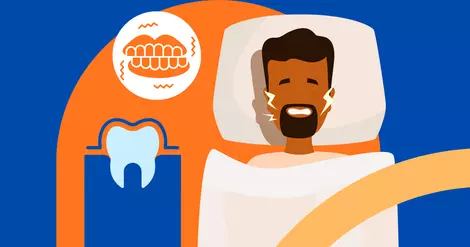
Additionally, children with Dravet syndrome may experience dental issues such as teeth that come in late. A small number have teeth that are smaller and shaped differently. Teeth grinding is common, and seizures raise the risk of dental injuries.
Talk to your child’s neurologist about newer treatments and other ways to help reduce the risk for serious complications.
Get updates directly to your inbox.



 Continue with Facebook
Continue with Email
Continue with Facebook
Continue with Email
Become a member to get even more





 Join


 Your Privacy Choices

This is a member-feature!
Sign up for free to view article comments.
We'd love to hear from you! Please share your name and email to post and read comments.
You'll also get the latest articles directly to your inbox.